Walk & wander
Choose the first turn before you leave
A smaller decision at the front door makes an ordinary walk easier to begin.
24 NOTES TO EXPLORE
Familiar streets, unhurried paths and reasons to take the next turn.
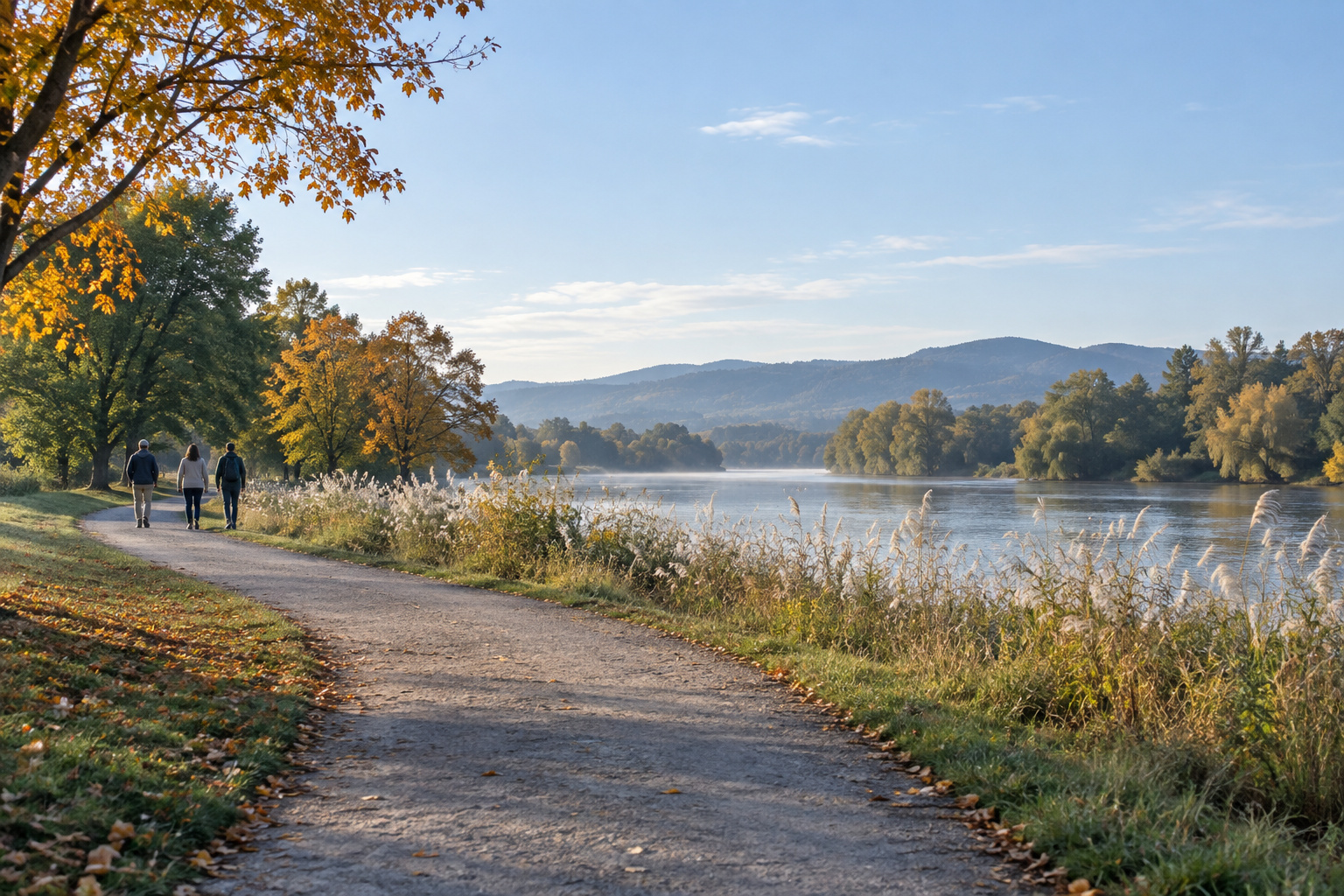
A smaller decision at the front door makes an ordinary walk easier to begin.
Build the return into the plan before spending your whole break getting somewhere.
A letter to post or a library return can give a walk a useful shape.
Rest stops are useful route information, not an afterthought.
An ordinary walk can become more attentive without becoming a photography project.
A small change of direction can make an old route feel less automatic.
Compare the quality of the route, not just the distance on the map.
A fixed departure time calls for a forgiving route and a generous margin.
The same path can offer something new without a new destination.
Try listening to the route before choosing a soundtrack.
A route with an early return is easier to keep in your week.
A familiar route can change underfoot when the weather changes.
A little clarity makes a social walk easier for everyone.
A flat-looking promenade still has practical details worth checking.
“Easy” is a label; surface and slope are information.
Start with a simple circuit that helps you understand the area.
A familiar public destination can anchor an unhurried outing.
Change the timing or the route before giving up on a favorite place.
Plan the return for the light you will have, not the light you have now.
An outing can have a clear purpose without a step total.
Three reliable routes can be more useful than a folder full of saved trails.
You do not have to keep moving through the best part of the route.
Construction, traffic and changing routines are good reasons to redraw the map.